Tuesday, June 13, 2017

Enthralling Historic Railway Sites Anywhere In The World

Railway systems have always been one of the most enduring symbols of progress in the contemporary world. When the British started developing the steam locomotive in the 18th and 19th centuries, a viable network of transportations was born. The railroads are marked arterial lifelines that connected cities and people.

Those steam locomotives, of course, have since been replaced by electric ones. The railway systems are also modernized a great deal, boasting of new safety features and more efficient rail networks. Since grade separation is ideal for these transportations, their construction requirements are often complex. Here are some of the most amazing historic railway sites registered as UNESCO World Heritage Sites, celebrating them as feats of engineering:

Mountain Railways of India

Three systems belong to this category: the Darjeeling Himalayan Railway, the Nilgiri Mountain Railway, and the Kalka Shimla Railway. The successful and effective implementation of a mass transport system that traverses the most treacherous mountain terrains is surely inspired work. All three lines are still fully operational.

Image source: wikipedia.org

Semmering Railway

The whole line is divided into several sections that progress like a visual narrative of sorts, set against the most picturesque backdrops in Austria. Comprised of a series of viaducts, tunnels, stone bridges, and other construction wonders, it has passed the test of time.

Rhaetian Railway in the Albula / Bernina Landscapes

The line is a combination of two historic ones (the Albula and Bernina lines) into one transalpine railway system that features an assortment of stunning structural features. From galleries and tunnels to viaducts and bridges, this line that crosses the Swiss Alps won’t fail to mesmerize anyone.
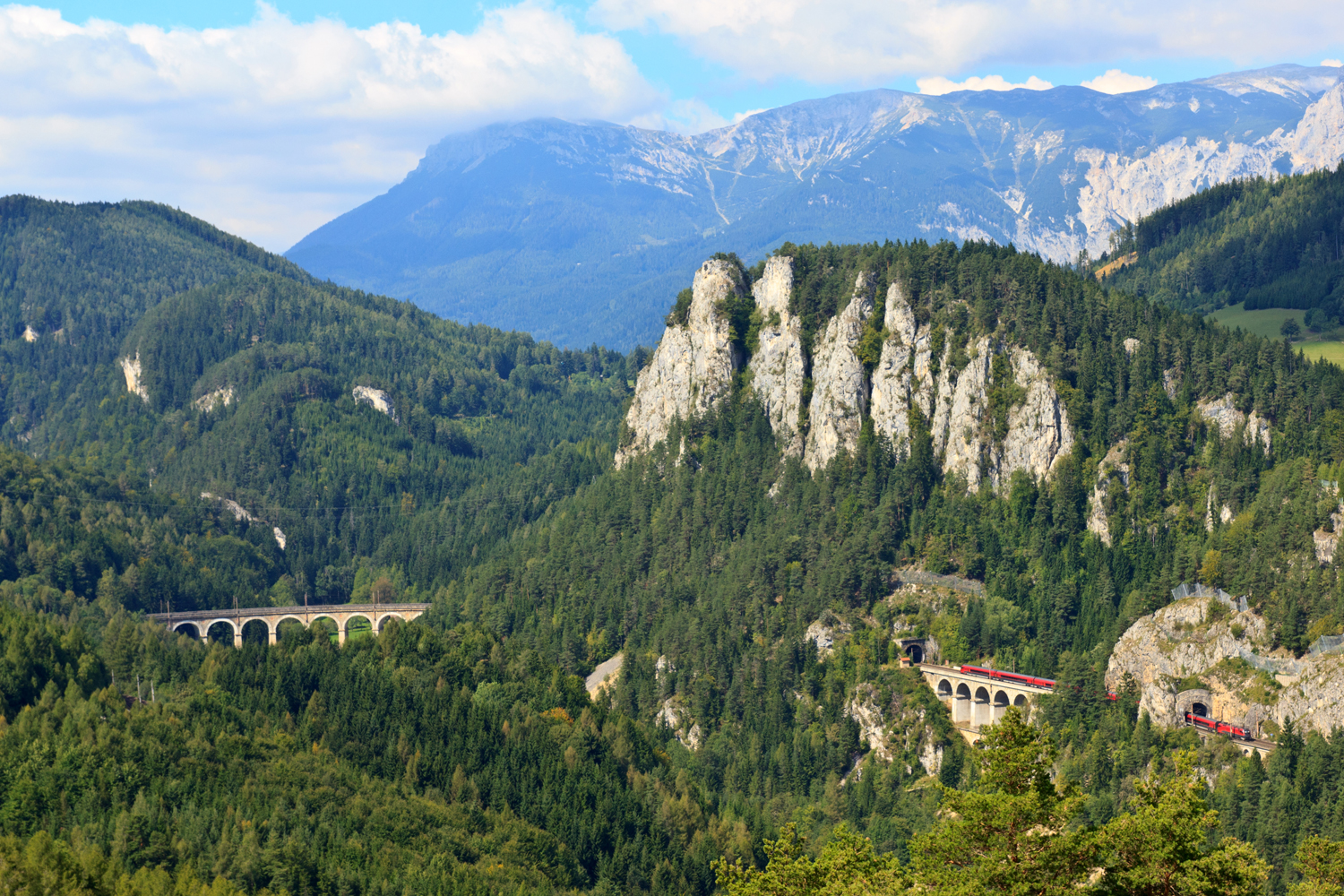
Image source: commons.wikimedia.org

Lisa Dudzik managed, for almost two decades, large-scale construction projects involving high-capacity subways and stations, roads, and highways. Having lived in different places as an expat, she lists Maldives, Belize, and the U.K. as her favorite travel destinations. To learn more about her inclinations, visit this blog.


Monday, April 10, 2017

Modern Trains: Favorable Options Over Roads And Short-Distance Air Travels, Thanks To Technology

Image source: Economist.com
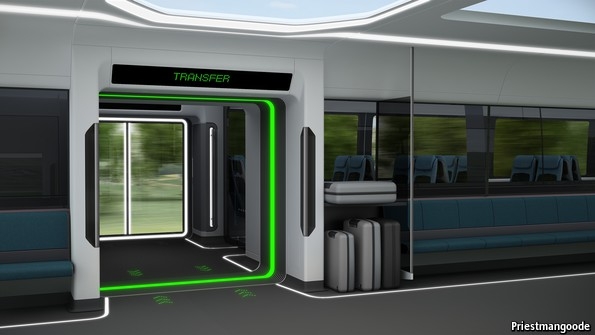
Technology for railway transportation appears less dynamic than other facilities for mass mobility. Comparatively, trains have much longer economic lives, while systems improvements seem to be few and far between. Their impact, though very substantial, has a gradual ripple effect. However, high oil prices, monstrous road traffic and increasing pressure to expand space for cargoes as well as changing preferences for modes of transport engender the acceleration of innovations in train technology.

The focus of better technologies is on traction, braking, and route-planning to smooth levitating effects, with trains appearing to glide at a fascinating velocity of 500kph (310mph). Avant-garde schemes for moving platforms that berth expeditiously with the transport facility’s fast pace have been formulated.

Technology change in gaining traction is demonstrated by GE’s PowerHaul, which features slip control that enables a single locomotive coal train to accommodate up to 31 cars. Computerization automatically replicates the operator’s actions throughout the train, rendering obsolete sending messages via radio.

Brakes technology zeroes in on lessening the distance required for a full stop. To put a train of a hundred cars running at 80kph to a complete halt can take 2 kilometers of track. Brake shoes turn hotter the faster a train’s wheels spin, which decrease friction and hence braking power. To address this, sturdier brake-shoe materials made with resins, elastomers and mineral fibers have been developed, and these have the capacity to raise friction at higher temperatures with reduced wobbling. Further, electronically induced brakes can be applied on all cars at once.

Image source: Economist.com
Train cars’ weight gets in the way of safe braking, thus, a software called Leader that simulates and analyzes the best loading and sequencing of cars at a given route has been introduced. It also instructs operators on optimum accelerating and braking schemes to put fuel costs at minimum.

Another novel technology known as magnetic levitation designed by the North American Maglev Transport Institute electronically controls the train, pushing it along a magnetic field powered by electricity gushing through a guideway a few centimeters beneath, with in place sensors that set magnetic power. Maglev trains are so light they require consume a third less of the energy required by fast conventional trains.

Lisa Dudzik is a contracts and claims manager from Perth, Australia. For over 18 years, she has overseen large-scale construction projects across several industries, including those for high-capacity subways and stations, roads, and highways. She holds an MBA and is currently undertaking an LL.M. in International Commercial Law. Visit this YouTube channel for additional resources on similar topics.


Thursday, March 30, 2017

Under construction: The world's biggest infrastructure projects

"Go big or go home" is probably what many of these developers had in mind when they conceptualized the following construction projects. From airports to dams to railway systems to space stations and even “new cities,” these megaprojects have captivated the world, and their completion eagerly anticipated. Below are three of the world’s biggest construction projects, a grand showcase of engineering, architecture, and design feats. 

Image source: businessinsider.com 

California high-speed rail
: With an initial budget of $40 billion, the rail system, which spans 1,300 kilometers (808 miles), will link Southern California and San Francisco. High-speed electric trains will transport an estimated 10,000 passengers daily, with travel time from Los Angeles to San Francisco taking only less than three hours at 320km/hr. Although the project is currently facing delays, Californians are still hopeful that the rail system will be operational by 2030. 

Beijing Daxing International Airport: There is no shortage of megaprojects in China. In fact, industry observers note 30 ongoing infrastructure projects that are set to reshape the world. One of these is the Beijing Daxing International Airport. With a proposed budget of $13 billion, the airport will feature seven runways and the world’s biggest terminal, which, when fully operational, can accommodate 72 million travelers annually. 

Dubailand: The $64 billion entertainment complex will rise in Dubai, United Arab of Emirates, which was touted as the most ambitious leisure project when it was first announced in 2013. And just how big this project is? Dubailand will be in a 278 sq.km complex, enormous enough to accommodate three Walt Disney Worlds. Upon its completion in 2025, Dubailand will feature theme parks, sports venues, health facilities, a hotel with 6,500 rooms, and a 10 million sq.ft mall. 

Image source: constructionweekonline.com 

For close to two decades, Lisa Dudzik has overseen large-scale construction projects such as high-capacity subways and stations, roads, and highways. Discover more about construction feats here.

Wednesday, February 15, 2017

South Korea’s Lotte World Tower: The Fifth Tallest Skyscraper In The World

South Korea has entered the list of countries with the tallest buildings as Lotte World Tower opened its doors to the public. Built by Kohn Pedersen Fox Associates and Lotte Engineering and Construction, the Lotte World Tower is a 123-storey structure that has taken six years to complete. The skyscraper is set in the heart of Seoul’s elite business hub in Jamshil. The construction of the building cost $3.5 billion.

Image source: heatex.com
The Seoul skyscraper is known for its smooth, tapered-glass exteriors. It houses luxury shops, high-end corporate offices, stylish apartments, and a seven-star hotel. The Lotte World Tower is also open to tourists and locals with its observation deck and gallery, overlooking Seoul City. The inclusion of Lotte World Tower in the list of the world’s top 10 tallest buildings has bumped off Malaysia’s Petronas Twin Towers.

Lotte World Tower has its share of controversies, too. In 2014, Seoul’s locals were puzzled with the discovery of sinkholes near the construction site, noting that it might not be safe for the public after it is put into completion. But the construction of the skyscraper continued despite great public opposition.

Image source: koreatimes.co.kr
Liza Dudzik is a contract and claims manager from Perth, Western Australia, who has overseen numerous large-scale construction projects including highways, roads, and public transportation stations. Follow this Twitter page to learn more about her professional work.

Tuesday, February 7, 2017

A Transportation Dream Come True: The Sydney Metro Project

Image source: sydneymetro.info
The Sydney Metro Project is currently the largest public transport project in Australia. It is expected to cost more than $12.5 billion, which will deliver 31 metro stations, including new ones in Victoria Cross, Crows Nest, Waterloo, Central Station, and many others. It will also create 65 kilometers of new metro rail infrastructure that will span from Bankstown in the south west part of the city to Rouse Hill in the north west.

The entire metro rail system is expected to begin operations in 2024, however, the first stage of the project, the Sydney Metro Northwest, is due for completion in the earlier part of 2019. The tunnels have already been constructed, as bridges and other civil works are expected to be finished ahead of schedule.

When finished, the project will revolutionize commuting in the most populous city in Australia. The Sydney Metro rail system will provide travelers world-class, efficient, safe, and reliable trains, and strategically located stations.

Image source: urbanalyst.com
Additionally, the technology that will be implemented will benefit customers greatly as they would have no more need to rely on timetables. The train service frequency will be every four minutes during peak hours, reducing waiting time. Travel apps will also be developed to allow customers to plan at home how they will commute. Real-time journey information will also be posted at the metro stations and on board the trains.

Lisa Dudzik from Western Australia has over 18 years of experience in managing large-scale infrastructure projects involving high-capacity subways and stations, roads, and highways. For more information about her work, visit this LinkedIn profile.


Tuesday, January 10, 2017

Tunneling Through Hurdles Faced By Melbourne's Metro Train Project

Melbourne's 10-year metro tunnel project is a giant leap forward as the government heeds the travel woes of the city's commuters. Engineers are already drafting solutions to some of the most difficult aspects of the tunneling project.

Image source: abc.net.au

Unstable soils are a problem throughout most of the locations where the tunnel will be built, including the silt soil at Arden and sandy ground at Domain station. Until now, engineers are working out the most effective designs for the tunnel to hold against the porous grounds of Melbourne, making the project one of the most difficult engineering endeavors of the city.

Perhaps the most glaring challenge is tunneling beneath the Yarra River, whose river bed is mostly a mix of basalt, silt, and clay. The presence of aquifers adds to the complexity. After careful study of alternative methods, engineers had elected to use Tunnel Boring Machines to minimize the construction's impact on the river and surrounding areas.

Image source: railexpress.com.au
Contractors are also working out methods to avoid adversely affecting road traffic, existing public transit lines, and pedestrians aboveground given the extensive time to complete the project. The government, however, is unfazed despite the formidable road ahead; it has already committed 10.9 billion dollars for the project's completion.

For almost two decades, Western Australian native Lisa Dudzik has managed large-scale construction projects involving subways, roads, and highways. For more construction news, visit this page.

Tuesday, November 15, 2016

Iconic Landmarks: Four Bridges Worth Visiting

Bridges are landmarks contributing to a city’s charm and history. The visions behind the construction of these structures were also grand, and captured the prevailing aesthetics of the era. Below are four breathtaking bridges worth visiting:

1. Golden Gate Bridge (San Francisco, United States)
The famous red bridge can be seen in countless postcards and other souvenirs, thus earning the record as the most photographed bridge. Opened to the public in 1937, this bridge serves as the West Coast’s landmark. Over 40 million vehicles pass by the bridge yearly.

Image source: Tripadvisor.com

2. Tower Bridge (London, England)
This bridge built in the 19th century is made out of two towers, with its upper level joined by walkways. Most tourists mistakenly take this for the London Bridge, which is much simpler than this architectural marvel. The Tower Bridge got its name from the Tower of London on the other side, which hugely influenced its design.

3. Millau Viaduct (Millau, France)
This is the tallest structure in France with a height of 1,125 ft. Finished in 2004, the bridge has four lanes and spans the valley of the River Tarn near Millau. The aim of its architect, Lord Foster, was to create a delicate-looking bridge that doesn’t obstruct the breathtaking views of nature. The effect is intended to make the bridge look like it’s floating on clouds.

4. Sydney Harbour Bridge (Sydney, Australia)
The Sydney Harbour Bridge is the world’s largest steel arch bridge. It is also nicknamed “The Coat Hanger” for its design and provides a good backdrop to the majestic Sydney Opera House. The bridge carries roads for vehicles and pedestrians from the North Shore to the Sydney central business district. Every New Year, fireworks decorate the view of the Sydney Harbour Bridge and skyline, a view the whole world looks forward to witnessing.

Image source: Traveller.com.au

These bridges are great examples of a particular country’s artistic and architectural sensibilities. Visiting these landmarks is a must for travellers who want to soak in a new city’s unique sights and atmosphere.

Lisa Dudzik is a contracts and claims manager originally from Western Australia. Visit this page for more information on Lisa and her field of work.